"Tri-state coverage" on a contractor's website means almost nothing on its own. The question an operations manager is really asking is narrower and more useful: can a crew be on this site at eight in the morning, and can they be back next week if the inspection fails. That is a drive-time question, not a map-colour question. Here is how we answer it, and how to make any sub answer it the same way.
Why Milford is a coverage answer rather than an address
Milford sits in Pike County at the point where Pennsylvania, New York and New Jersey meet. The Delaware is the state line on one side and the New York border is a few minutes north. That geography is the reason a small crew here can cover ground that a larger operation in Philadelphia, central New Jersey or Scranton cannot cover economically.
It matters commercially because the buyers who dispatch service work, fleet owners, operations and maintenance platforms, warranty administrators, explicitly buy regional coverage to cut travel cost and response time. Nobody can undercut proximity with a marketing budget.
The counties inside the standard radius
These are the counties we mobilise to on a normal schedule:
- Pennsylvania: Pike, Monroe, Wayne, Lackawanna, Luzerne, Northampton
- New York: Orange, Sullivan, Ulster, Rockland
- New Jersey: Sussex, Warren, Passaic, Morris, Bergen
That is the honest list, and it is deliberately shorter than "PA, NY and NJ." Everything on it is reachable for a normal working day without a hotel, which is the only definition of coverage that survives contact with a schedule.
What sits outside it, and what that means
Work outside those counties is not a no. It is a different conversation about staging, crew size and duration. A week-long ground-mount package four hours out can make complete sense. A single service truck roll at the same distance usually does not, and we will say so rather than take it and disappoint you.
Two specific caveats worth naming. New York City is a separate licensing world requiring a licensed master electrician and a licensed general contractor, and it is not part of this radius. And any New Jersey work needs the electrical credential settled per job, because the state regulates photovoltaic work as electrical work, covered in the prequal packet a subcontractor should hand you.
How to test any sub's coverage claim
Three questions, and they take about a minute:
- Name the counties. A sub who answers with states is describing ambition. A sub who answers with counties is describing a schedule.
- What is the mobilisation window to this specific address? Not "we cover that area", how many days, and does that change in January.
- Where have you actually pulled permits? In New York especially, where requirements are set authority by authority, a list of real municipalities is worth more than any licence claim. It is also the question that separates a crew that has worked a jurisdiction from one that has driven through it.
Winter is part of the answer
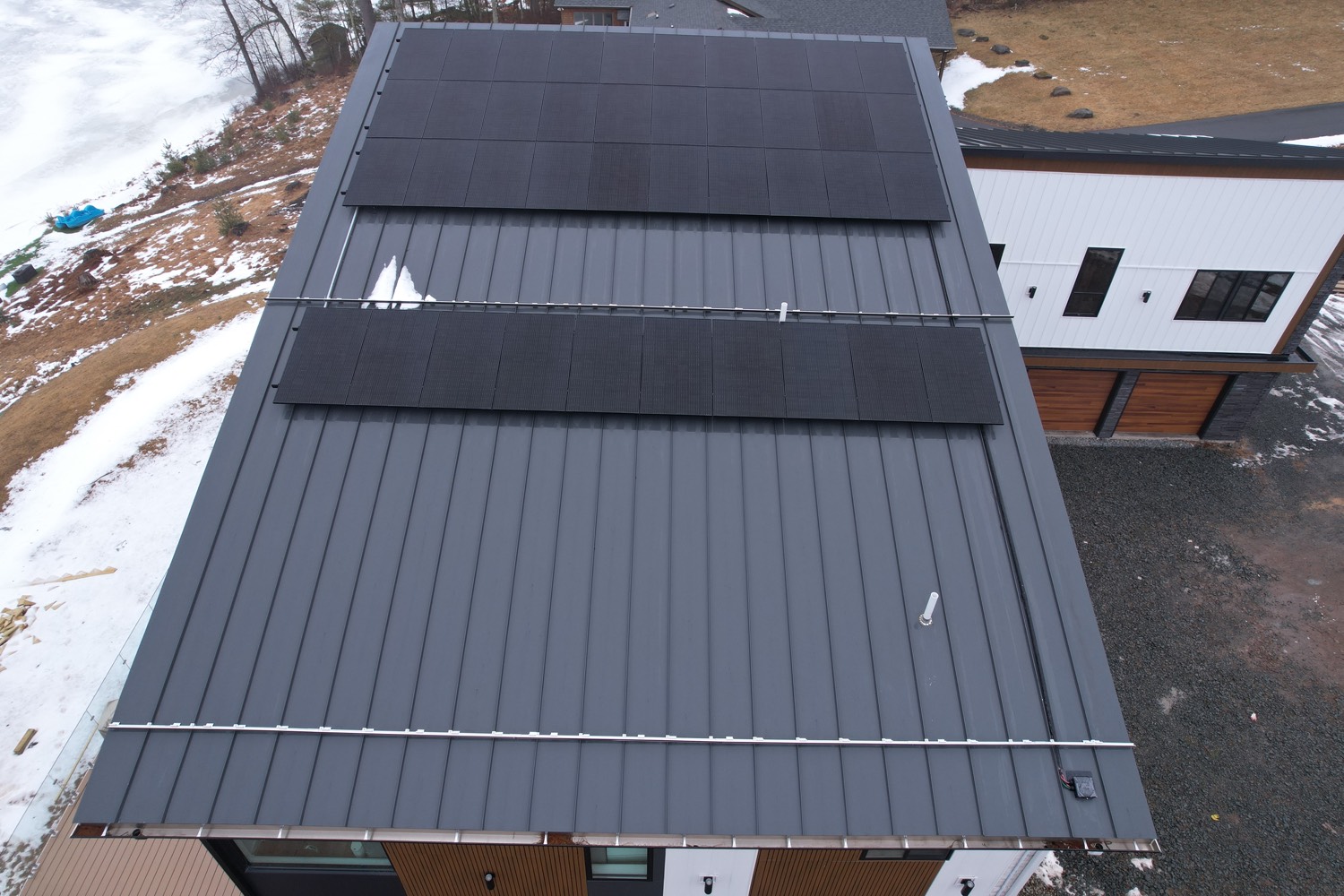
Anyone quoting the same mobilisation window in February that they quote in June has not worked a Poconos winter. Snow load on an array, ice on a metal roof, and a site road that is passable only after a plough are all schedule facts rather than excuses, and they should be in the estimate.
The practical version: service diagnosis on a snow-covered array frequently needs a second visit, and we say that when the ticket arrives rather than after billing for the first one. Install schedules between December and March carry slack or they slip.
Why we publish the list at all
Because most contractor websites in this region do not, and the four numbers a contractor buyer actually wants, crew capacity, mobilisation time, insurance carried, and where the crews are licensed to work, are almost never on the page. Publishing the county list costs us the jobs we would have had to decline anyway, and saves everyone the call.
The full list also sits on our coverage section, and what we take on in those counties is on our capabilities. If a site is borderline, send the address and we will give you a straight yes or no.
What we would tell a partner weighing this up
- Ask a sub for counties and drive times, not a three-state claim.
- The real question behind coverage is whether a crew can be on site at 8am.
- Being close to the work is the one advantage a competitor cannot buy with marketing spend.